
If you’re a California business owner, investor, or other taxpayer who makes estimated tax payments, September 15, 2026 is a date worth paying attention to.
California’s September 15 Estimated Tax Deadline: What You Need to Know
But there’s a common point of confusion:
You may not have a California estimated tax payment due in September while still having a federal estimated tax payment due to the IRS.
That’s because California and the federal government don’t use identical estimated-tax payment schedules.
Understanding the difference can help you avoid unnecessary payments, missed deadlines, and potential federal tax penalties.
Is September 15 a California Estimated Tax Deadline?
Yes but there is an important distinction.
For 2026, California’s Franchise Tax Board (FTB) lists September 15 as the third estimated-tax installment date. However, under California’s standard payment schedule for individuals, the required amount for the third installment is 0% of the annual required payment.
California generally divides the required individual estimated tax payments as:
| Payment | Due Date | Required Portion |
|---|---|---|
| 1st | April 15, 2026 | 30% |
| 2nd | June 15, 2026 | 40% |
| 3rd | September 15, 2026 | 0% |
| 4th | January 15, 2027 | 30% |
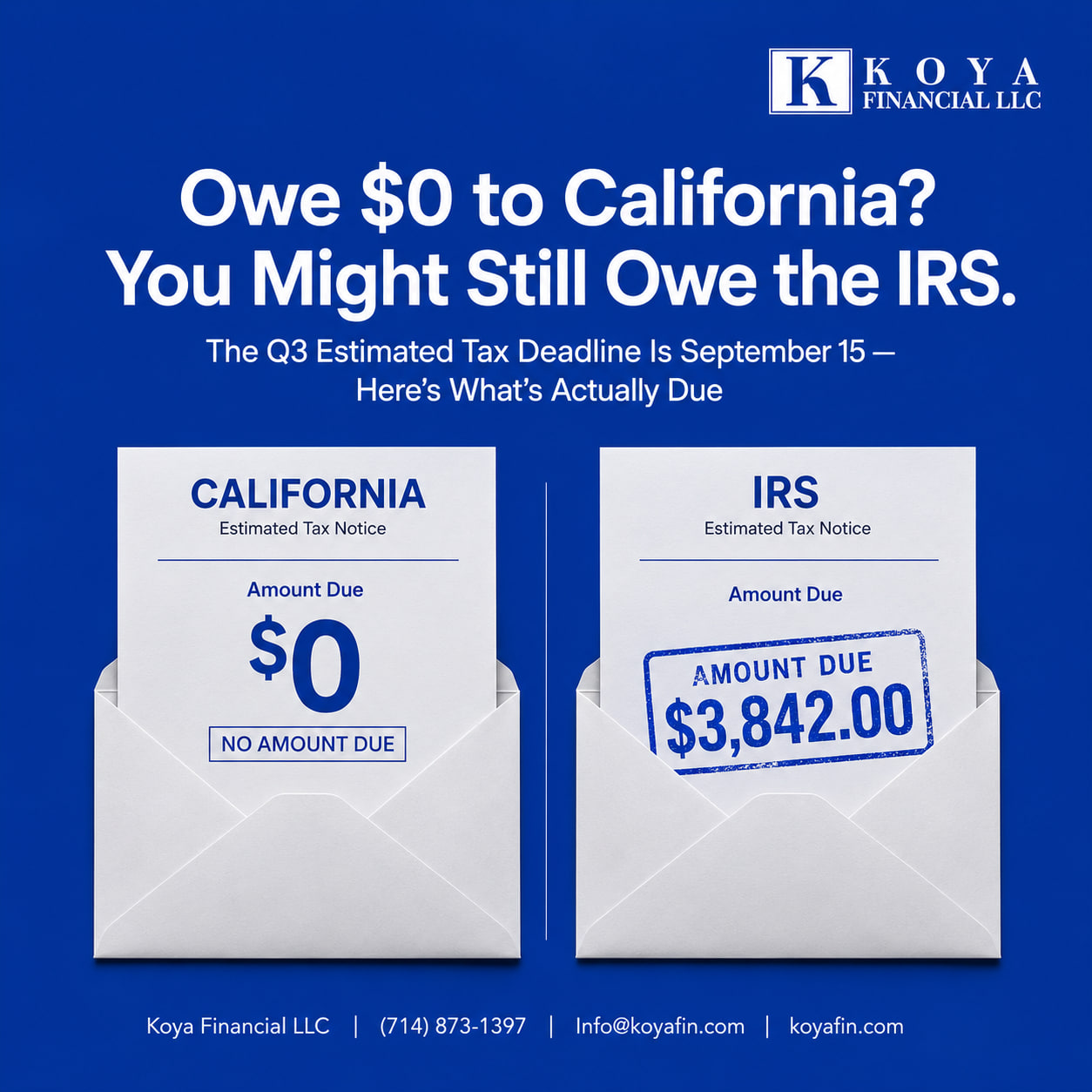
So many California taxpayers won’t make a state estimated payment in September.
However, your federal tax obligations are separate.
What About the IRS?
The IRS follows a different schedule.
For taxpayers who are required to make estimated federal tax payments, the third-quarter payment is generally due on September 15.
This payment typically relates to income earned during the summer months and is separate from your California estimated tax schedule.
That’s why someone can legitimately have:
- No California payment due in September.
- A federal estimated payment still due to the IRS.
Why Could You Owe $0 to California but Still Owe the IRS?
California and the federal government are separate tax systems.
Your tax liability depends on factors such as:
- Business income
- Investment income
- Deductions
- Tax credits
- Payroll withholding
- Previous estimated payments
- Your filing status
Because California and federal tax rules are different, your estimated payment obligations won’t always match.
For example, a California consultant earning income through 1099 contracts may have enough California estimated payments already scheduled under the state’s payment structure but still need to make a federal payment by September 15.
A zero California installment does not mean you’re finished paying taxes for the year.
Who Should Pay Attention to the September 15 Deadline?
This deadline is especially important if your income isn’t fully covered by payroll withholding.
You should pay close attention if you’re a:
- Small business owner
- Freelancer
- Independent contractor
- Consultant
- Real estate professional
- Investor with significant taxable income
- Self-employed professional
If you expect to owe enough federal tax after withholding and credits, the IRS may require estimated tax payments during the year.
Failing to pay enough can result in an underpayment penalty.
Don’t Assume Every Quarter Is the Same
Many taxpayers simply divide their expected annual tax bill into four equal payments.
That isn’t always the best approach.
Imagine your income looked like this:
- January–March: Moderate income
- April–June: Strong growth
- July–September: Your busiest quarter
Your actual tax obligation may change as your income changes.
That’s why reviewing your year-to-date income before each estimated payment deadline can be much more accurate than relying on an estimate made months earlier.
What Should California Business Owners Review Before September 15?
Before the deadline, take a few minutes to review the following.
1. Your Federal Estimated Tax Position
Check whether your withholding and previous estimated payments are enough to cover your expected federal tax liability.
2. Your California Estimated Tax Position
Even though many individual taxpayers don’t have a third California installment due in September, you should still review whether your overall state estimated payments are on track.
3. Your Year-to-Date Income
Has your business grown?
Did you receive a large contract?
Did investment income increase?
Changes like these can affect your tax position.
4. Previous Payments
Keep a record of payments made to both the IRS and California Franchise Tax Board.
Mixing up state and federal payments is more common than many taxpayers realize.
Common Mistakes to Avoid
Assuming “No California Payment” Means “No Tax Payment”
This is probably the biggest mistake.
Your California and federal obligations are separate.
Forgetting the Federal Deadline
Many California taxpayers focus on the state schedule and accidentally overlook the IRS payment due.
Using Old Income Estimates
If your business income changed significantly during the year, your original estimate may no longer be accurate.
Waiting Until the Last Minute
Reviewing your estimated taxes a few days before the deadline leaves little time to correct an issue or make an informed payment.
The Bottom Line
September 15 can be confusing for California taxpayers because the state and federal estimated tax schedules don’t line up exactly.
For many California individual taxpayers, the standard third estimated tax installment is 0%, meaning there isn’t a state payment to make in September.
However, the IRS generally has a third-quarter estimated tax payment due on September 15.
So don’t assume that because California doesn’t require a payment that you’re done with estimated taxes for the quarter.
Review your federal and state tax positions separately, especially if your business income, investments, or other taxable income has changed during the year.
Need Help Reviewing Your Estimated Taxes?
Estimated tax deadlines are much easier to manage when you know exactly what you’ve already paid and what you may still owe.
Koya Financial LLC helps California individuals and businesses with bookkeeping, accounting, tax preparation, tax planning, and financial guidance.
If you’re unsure whether your estimated tax payments are on track, schedule a consultation with Koya Financial to review your situation and plan your next steps with confidence.